
About the Academy
In 1974, the concept of establishing a specialised academy for training Royal Oman Police personnel came about after the Police Training School, established in 1973 in Al Qurm, Muscat Governorate, became unable to accommodate the growing numbers of Omani nationals seeking to join the police force.
Construction of the Academy commenced in early 1976, and it was officially inaugurated on 5 January 1980 under the gracious patronage of the late Sultan Qaboos bin Said – may Allah Almighty rest his soul in peace. This historic date was subsequently designated as the official Police Day, which is commemorated annually. Pursuant to Royal Decree No. (62/2000) issued in 16 July 2000, the Academy was renamed to the Sultan Qaboos Academy for Police Sciences, thereby associating the name of this distinguished institution with that of the late Supreme Commander, who accords this Institution his continued care and attention.
The Sultan Qaboos Academy for Police Sciences is located in the Wilayat of Nizwa, Al Dakhiliyah Governorate, approximately (18 km) from Nizwa and (160 km) from Muscat Governorate, and it occupies a vast geographical area.
The Academy functions as an integrated city. In addition to its diverse training facilities and establishments, it provides all essential services for both staff and trainees. Besides its strategic location, away from urban life, offers an ideal educational and training environment for preparing and qualifying members of the Royal Oman Police, while planting the values and discipline of military life.


Commander’s Massage
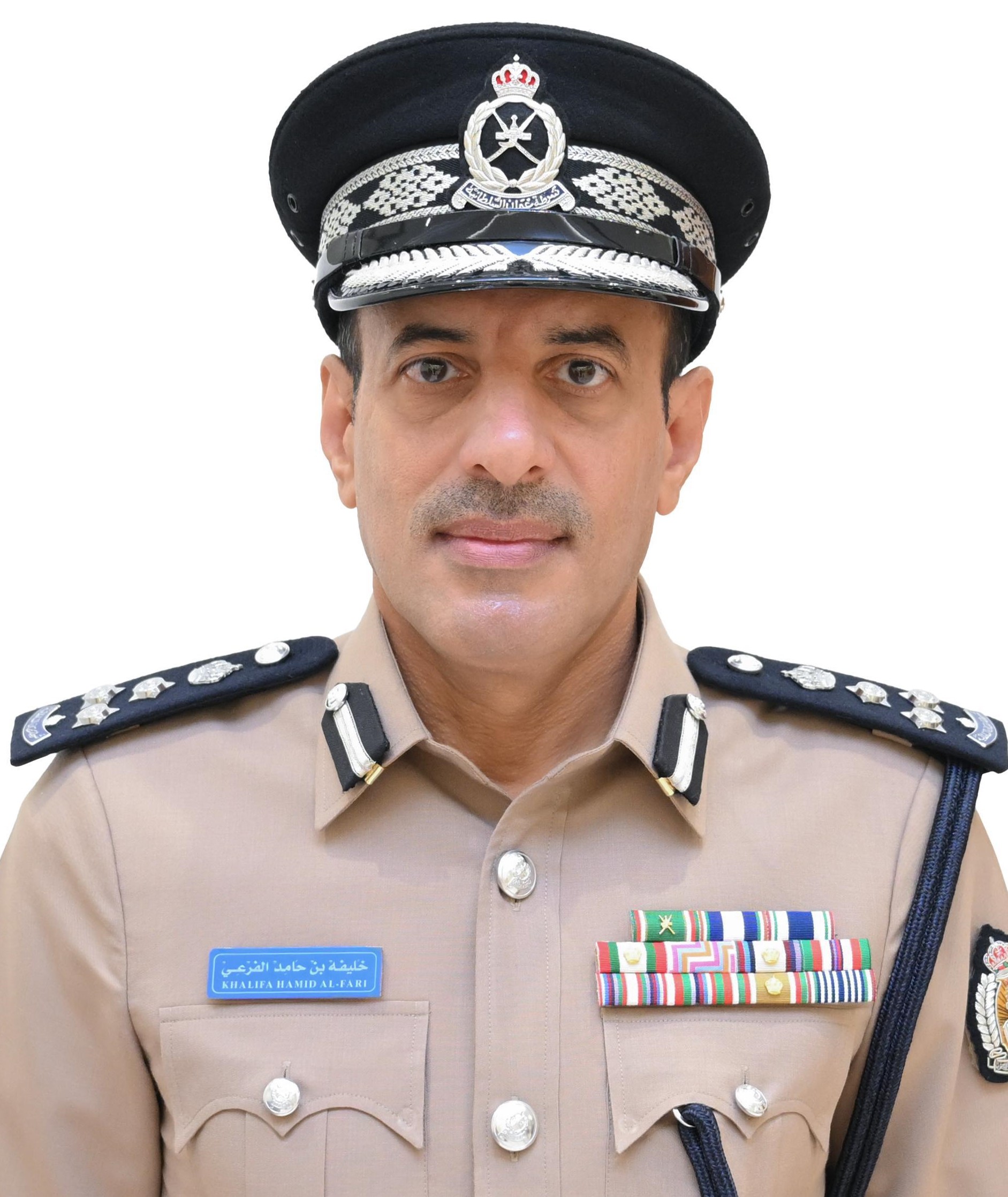
The Sultan Qaboos Academy for Police Sciences is the institution entrusted with the implementation of the training policy for the Royal Oman Police. Since its establishment in 5 January 1980, the Academy has received gracious care and high patronage from the late Sultan Qaboos Bin Said– may Allah Almighty rest his soul in peace – reflecting his firm belief in the pivotal role played by the Academy in preparing and qualifying police personnel capable of performing their duties with efficiency and professionalism. This, in turn, contributes to the enhancement of security and stability throughout the Sultanate of Oman.
The Sultan Qaboos Academy for Police Sciences has witnessed comprehensive development across its academic, training and administrative domains, enabling it to consolidate its position as a leading institution in the preparation and qualification of academically and professionally competent police cadres. The Academy has given particular emphasis on strengthening its academic and research frameworks, fostering creativity and innovation in the fields of police and security sciences, as well as integrating modern technologies into curricula and training programmes. These efforts ensure high-quality outcomes aligned with the demands of contemporary policing.
Furthermore, the Academy has established effective strategic partnerships with higher education and research institutions within the Sultanate of Oman and abroad, facilitating the exchange of expertise and the continuous development of academic and training programmes in accordance with international best practice. As part of its ongoing pursuit of institutional excellence, the Academy has attained institutional accreditation at effective level from the Authority for Academic Accreditation and Quality Assurance of Education, reflecting its commitment to implementing quality and excellence standards across all academic, training and research aspects.
This website forms a part of the Academy’s continuous development and modernisation initiatives, serving as an effective platform to introduce the Academy, disseminate police and legal knowledge, and provide an open channel for communication and engagement with the community. Hence, we offer you a cordial greeting.
Academy Strategy
The Sultan Qaboos Academy for Police Sciences developed a strategic plan for the period from 2019 to 2025, to framework the academic and training work in a manner that fulfils the objectives for which the Academy was established. In addition, it reflects the Academy’s aspiration to build a prestigious and leading educational institution that enriches police work and provides the foundations for sustained development and success.
In formulating its first strategic plan, path and objectives, the Academy was guided by the reference framework and core principles set out in the Royal Decree No. (62/2000), the directives of the Royal Oman Police Headquarters, quality assurance and academic accreditation requirements and standards, as well as the outcomes of reviews, data analysis and assessments of the Academy’s current activities and programmes.
Academy Councils
Academy Council
The Academy Council oversees academic and training matters at the Sultan Qaboos Academy for Police Sciences. It is chaired by the Inspector General of Police and Customs and a number of members with relevant competence, appointed by a decision from the Inspector General. The decision also determines meetings system and schedule.
Administrative Council
The Administrative Council is responsible for overseeing academic and training matters at the Academy. It is chaired by the Inspector General of Police and Customs and includes members with relevant competence appointed by a decision from the Inspector General of Police and Customs. The decision also determines meetings system and schedule.
Advisory Council
The Advisory Council provides expertise and consultation on matters referred to it by the Chairman of the Academy Council. It also contributes to the development of academic and training programmes and curricula to achieve the Academy’s vision, mission and objectives.
The Advisory Council is chaired by one of the Assistant Inspectors General of Police and Customs and includes members with relevant competence from the Police and other Institutions. Members are appointed by decision from the Inspector General of Police and Customs, which also determines meetings system and schedule.
Scientific Council
The Scientific Council is responsible for overseeing scientific matters related to the Police College and for developing plans to enhance educational programmes and curricula. It is formed by decision of the Commander of the Academy and is chaired by the Assistant Commander. The council membership includes the Director of the College, the Dean, Heads of Scientific Departments, the Director of Quality Assurance and Academic Accreditation, and the Head of Admissions and Registration at the Police College.